Can You Drink Softened Water? Understanding the Risks and Benefits!
Water softeners have become a popular solution for tackling hard water in homes, but they also raise an important question: Can you drink softened water safely? While softened water offers many household benefits, including preventing scale buildup and extending appliance life, its sodium content can make some people pause, especially those with specific health concerns like hypertension or sodium intolerance.
In this article, we break down the facts, debunk common myths, and provide clear insights so you can make an informed choice about drinking softened water.
Key Takeaways:
- Softened water is generally safe for drinking when the source water hardness is within recommended limits, but suitability may vary based on individual health conditions.
- During the softening process, calcium and magnesium are replaced with sodium, which can slightly increase the sodium content of water.
- The sodium added through water softening is typically low and, in most cases, comparable to everyday foods consumed in a normal diet.
- Individuals with hypertension, kidney disease, or those on sodium-restricted diets should carefully monitor softened water intake and seek medical advice if needed.
- For households concerned about sodium levels, reverse osmosis (RO) systems can be used as an additional filtration step to produce low-sodium or sodium-free drinking water.
Is Softened Water Safe to Drink?
Yes, softened water for drinking is normally safe. However, during the softening process, as the hard minerals are removed, an amount of 20-30 mg of sodium per 8 ounces goes to the softened water.
A normal person can take sodium input up to 2300 mg (1 teaspoon of table salt), while low-sodium diet patients should not take sodium more than 1500 mg per day (⅔ of a teaspoon of table salt).
For infants, the daily sodium intake is 400 mg, while for children between 2 years to 13 years it varies from 1200 mg to 1800 mg.
So the amount of sodium in soft water can vary depending on the hardness level of the water. Sodium itself is not considered harmful at typical drinking water levels. According to WHO drinking water guidelines, there is no health-based limit for sodium; however, concentrations above around 200 mg/L may affect the taste and acceptability of water.S
What is Soft Water and How is it Made?
Softened water is the water that you get from a water softener, after getting all the hard particles and their salts removed from it. Softened water does not have the salts of calcium, magnesium, and sulfate that increase the water hardness levels.
A water softener works on the principle of ion exchange, where hard particles accumulate on resin beads and are then removed by using a brine solution and high-pressure water. This brine removes the hard minerals from the beads and replaces them with positive sodium ions. This concern is closely linked to the role of sodium in ion exchange, which becomes clearer once you understand whether a water softener actually adds salt to water or not.
This charging of resin beads is called the water softener regeneration process, which helps to soften further hard water.
To understand how hard your water is and whether it needs softening, water hardness is measured in grains per gallon (gpg) or parts per million (ppm). The table below shows the standard classification levels used by water quality experts.
| Degree of Hardness | Grains per Gallon | PPM (or mg/L) |
| Soft | <1.0 | <17.0 |
| Slightly Hard | 1.0-3.5 | 17.1-60 |
| Moderately Hard | 3.5-7.0 | 60-120 |
| Hard | 7.0-10.5 | 120-180 |
| Very Hard | 10.5 | 180 |
Get a free water test from WaterMart to know your exact hardness level and find the right solution for your home.
Potential Side Effects of Drinking Softened Water
There are no potential side effects of drinking softened water reported so far. However, people with hypertension may have sensitivity toward higher levels of sodium it. So let’s look at all the potential side effects of drinking soft water and how you can overcome them.
Increased Sodium Levels in Drinking Water
Increased sodium levels in drinking water can have serious health risks, especially for people with high blood pressure or kidney problems. You can check higher sodium levels through a certified lab, which will measure the sodium concentration in milligrams per liter (mg/L).
If the sodium levels exceed the recommended safe limit (which is 30-60mg/L set by the EPA), consider installing reverse osmosis or a water softener system with a sodium-free resin. Regularly monitor your water quality to ensure the sodium levels stay in check. If unsure, consult a water treatment specialist for tailored advice.
Taste of Softened Water
Softened water has a smooth, silky feel due to the removal of hard minerals like calcium and magnesium. Some people notice a slightly salty taste, especially if the softener uses sodium in the process.
But the softened water is not salty at all. It is just the feeling; otherwise, a slice of ham is saltier than a gallon of soft water. It also depends on the roots of the drinker. If you are raised in an area of hard water and have been using soft water for a long time, you may not feel any difference.
Actually, the absence of hardness makes it feel different from regular water, often described as slippery. This change can be more noticeable when drinking or showering, but many find it refreshing and gentler on the skin compared to hard water.
Effects on People with Specific Health Conditions
Softened water can affect individuals with certain health conditions, particularly those on low-sodium diets or with kidney problems. Since water softeners often use sodium to replace hard minerals like calcium and magnesium, the increased sodium levels may pose a risk for people with high blood pressure or heart disease.
For those with kidney issues, the added sodium can strain the kidneys, leading to complications. These individuals need to consult a healthcare provider before using softened water or consider alternative methods, like potassium-based softeners, to minimize sodium intake while still enjoying the benefits of soft water.
Some Myths about Water Softeners
People get so confused while opting for water softeners as a drinking water option. In Canada, most of the states have hardness levels ranging from 16 – 25 grains, which is considerably higher. Installing water softeners may solve 90% of water problems, but if you are getting the following opinions, take them only as myths.
- Water softeners remove healthy minerals from the water.
- You can’t make tea or coffee using softened water.
- Softened water tastes salty.
- You get a film on your skin if you wash with softened water.
- Municipal water is clean, and you don’t need water softeners for it.
- Soft water is bad for your gut health as it removes good bacteria from the water alongside impurities.
Forget all these things; if these myths are stopping you from getting a water softener. The water softeners are one of the best and most economical methods to remove water hardness, making it usable for your household.
Benefits Of Drinking Softened Water
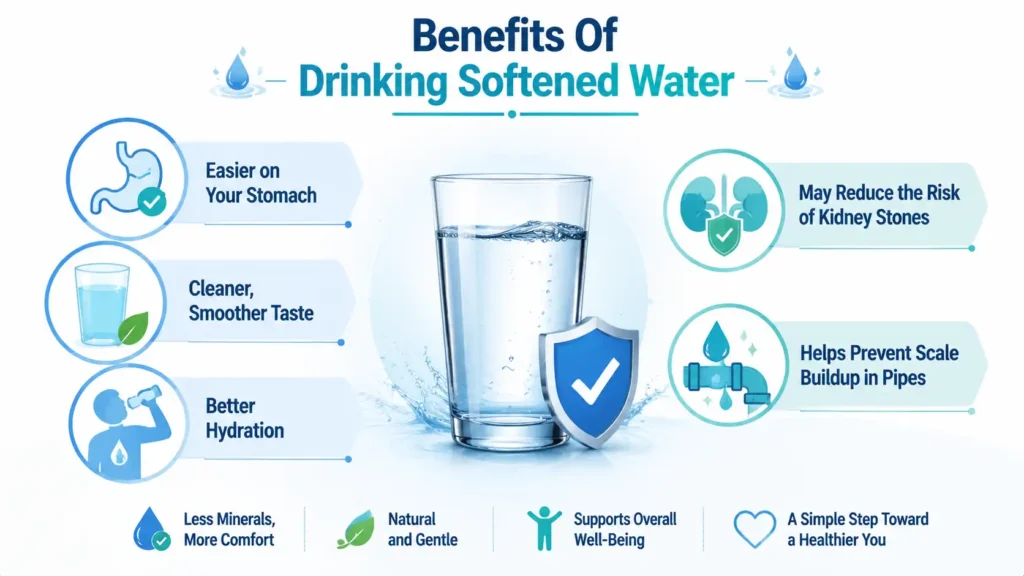
Drinking soft water is easier on your stomach because it has lower levels of minerals like calcium and magnesium. It often tastes cleaner and smoother than hard water. Soft water can help reduce the risk of kidney stones and scale buildup in pipes that carry your drinking water. It may also make it easier for your body to stay hydrated. Overall, soft water is a healthier and more pleasant option for drinking.
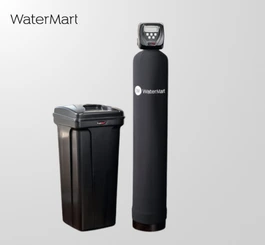
Interested In Softened Drinking Water At Your Home?
Enjoy better-tasting, mineral-free water straight from your tap. Softened water is gentle on your body and ideal for daily use. Get the latest in advanced water softening filter systems.
How To Make Soft Water Drinkable?
The most effective way to remove sodium from soft water is by using a Reverse Osmosis (RO) system, which can remove up to 90–95% of dissolved sodium along with other impurities.
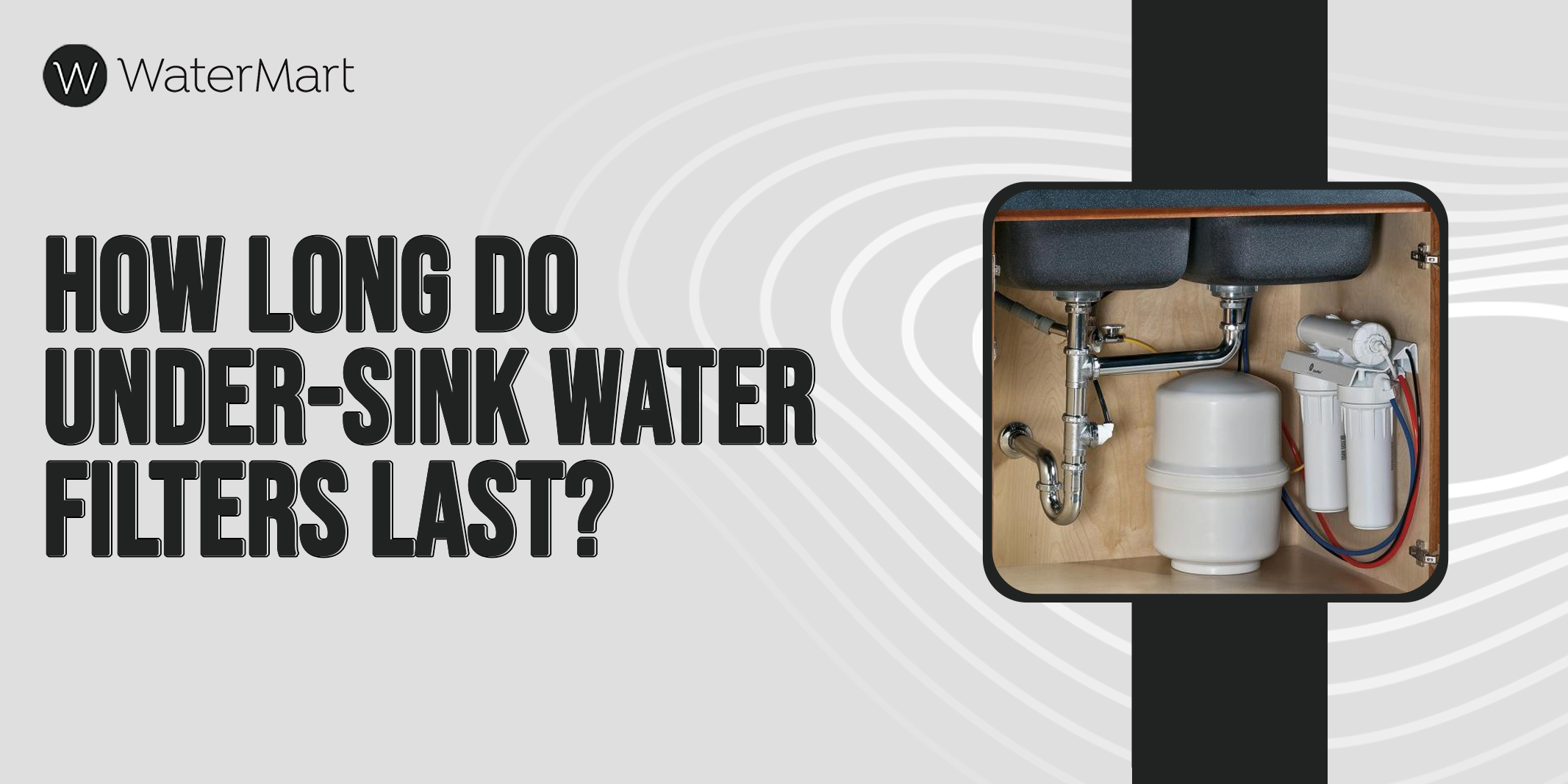
RO systems work by forcing water through a semipermeable membrane that blocks sodium, chlorine, and other dissolved salts, producing purified drinking water. It is usually installed under the kitchen sink and uses a pre-carbon filter along with a membrane to ensure cleaner, better-tasting, and sodium-reduced drinking water.
Soft water is generally safe for household use, but for people on low-sodium diets or those who prefer sodium-free water, RO filtration provides an additional purification step.
Conclusion
Water softeners have many benefits that can help you get softened water for better health, improved hair and skin, and protection of your appliances from white scale and mineral build-ups. However, people with a low-sodium diet for hypertension problems may have high sodium levels in water, which is not good for their health. Installing a reverse osmosis filter system can help you get rid of any problems softened water has.
FAQs | Can You Drink Softened Water?
If your softened water contains sodium ions or chlorine, drinking it is not recommended, especially for patients with sodium intolerance.
High discharge of sodium and potassium to sewer systems contaminates the wastewater, ultimately adding to the depletion of water. Aquatic life is affected by high sodium levels, along with environmental destruction in terms of adding hard minerals to the water. In places of water scarcity or environmental awareness. Some water softeners are banned.
Yes, the choice of a filtration system depends upon your needs. If your major concern is sodium, use water conditioners. Whole-house water filtration systems and RO systems are other alternatives.
If you want to remove chlorine or sodium from soft water, you need another water filter before the point of use.
Soft water contains little to no amount of sodium; it is normal. A 250 ml of soft water may contain less than 12.5 mg of sodium, which is safe to drink according to the doctors.
The main environmental concern is not drinking it, but the brine discharge from water softeners. During regeneration, salt water is released into wastewater systems, which can increase salinity in local water sources and affect soil or aquatic ecosystems in some areas.
They can, but it depends on how much sodium is in the water. In most cases, the sodium added by a water softener is small, but people on strict low-sodium diets are often advised to use RO filtered water or bypass softened water for drinking to be safe.
Usually, no. Softened water typically does not taste salty for most people. However, if the original water is very hard, the sodium level after softening can be higher, and some people may notice a slight taste difference.
There is no strict health-based limit for sodium in drinking water. However, guidelines suggest that levels above around 200 mg/L may affect taste, and very low-sodium diets may require even lower levels (around 20 mg/L as an advisory level for sensitive individuals).