Does a Water Softener Add Salt to Water? Myth Explained
Do water softeners add salt to water? Every Canadian who thinks of installing a water softener shows concern about residual salt in the soft water. No doubt an amount of salt (roughly 12 mg per 8 ounces or a glass of water) remains in the softened water as a result of the ion exchange method, but it does not make the water notably salty.
Water hardness governs how much salt is needed to remove the hard particles from the water. As a general rule, water quality testing is the foundation of informed water treatment decisions.
In this blog, we’ll discuss sodium levels in softened water and address safety concerns for people on low-sodium diets, including infants and high blood pressure patients. We will provide practical solutions if you’re concerned about sodium intake. By the end, you’ll be able to decide if the softened water is right for your Canadian home and how to use it safely.
Key Takeaways:
- Water softeners don’t add salt to drinking water; salt is used during regeneration, then flushed away.
- Softened water contains minimal sodium, 12-28 mg per 8-ounce glass, classified as a very low sodium intake as per daily requirements.
- Soft water is safe for healthy adults but not recommended for infants under six weeks or those on low-sodium diets.
- Potassium chloride or reverse osmosis systems offer sodium-free alternatives for homeowners concerned about low-sodium intake.
How Much Sodium Is in Softened Water, and Is It Safe?
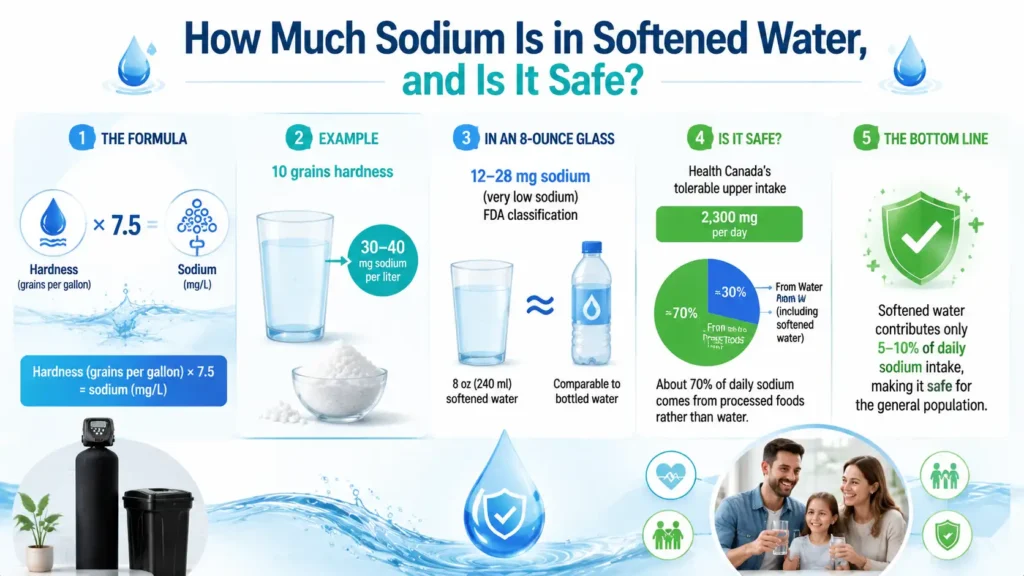
The amount of sodium in softened water depends on your water’s hardness level. A simple formula helps: multiply your water hardness (in grains per gallon) by 7.5 to estimate sodium in mg/L.
For example, 10 grains of hardness add approximately 30-40 mg of sodium per liter. An 8-ounce glass contains roughly 12-28 mg of sodium, classified as “very low sodium” by FDA standards, comparable to bottled water. For most healthy adults, this poses no health risk.
Health Canada’s tolerable upper intake for sodium is 2,300 mg daily, with about 70% coming from processed foods rather than water. Softened water contributes less than 5-10% of daily sodium intake, making it safe for the general population.
Do Water Softeners Put Salt in Water?
No, water softeners do not add salt to your drinking water. This is the most important misconception to clear. While salt plays a critical role in how water softeners work, the salt itself is not added to the water you drink or use throughout your home.
The salt only enters the system when resin beads need a thorough cleaning, known as “regeneration.” When water softeners treat your water, they remove hardness minerals (calcium and magnesium) using ion-exchange technology. The resin beads inside the softener tank eventually become saturated with these minerals and need to be “recharged.”
The confusion arises because people often conflate two different things: the salt used for regeneration and the sodium in treated water. These are completely different. The salt (sodium chloride) added to your brine tank is a chemical compound used as a regenerant.
The sodium that ends up in your softened water comes from the ion exchange process; it’s measured in milligrams, not the pounds of salt you add to your system.
How Do Water Softeners Work?
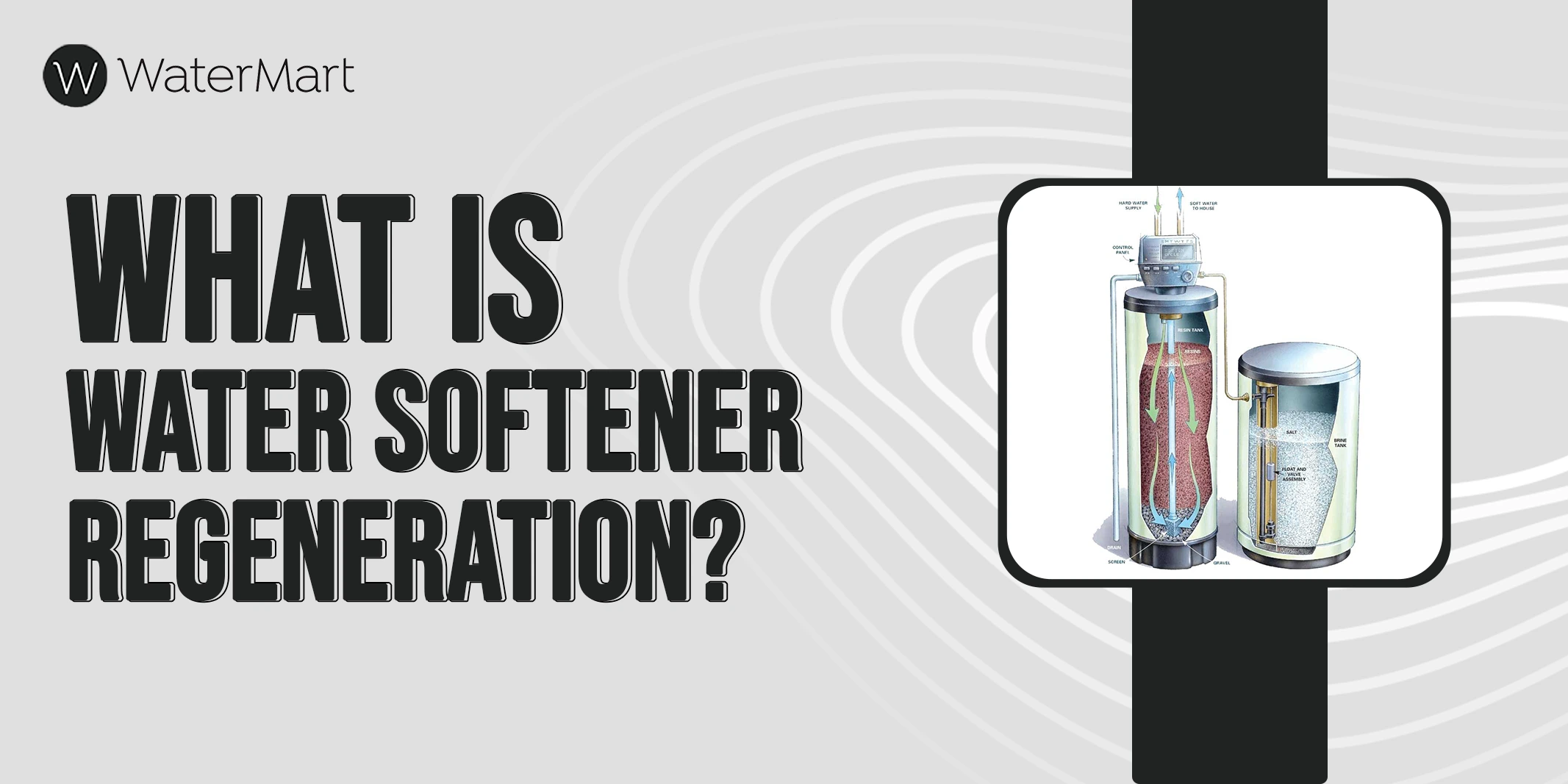
Water softeners use a process called ion exchange to remove hardness from your water. Inside the softener tank are thousands of tiny resin beads coated with sodium ions. As hard water flows through, calcium and magnesium ions (which cause hardness) stick to these negatively charged beads.
The resin removes these minerals and replaces them with sodium ions, a simple molecular swap that softens your water without removing it entirely.
Over time, the resin beads become saturated with calcium and magnesium and need to be recharged with sodium ions. This is where salt plays its role in the water softening systems.
During the regeneration cycle, a concentrated brine solution (salt mixed with water) is flushed through the tank, forcing the accumulated hardness minerals down the drain. The sodium from the brine then recharges the resin beads, preparing them to soften water again. Once regeneration is complete, excess brine is flushed away, and your softener is ready to work.
Most water softeners use sodium chloride (traditional salt) for regeneration, though some homeowners prefer potassium chloride as a sodium-free alternative. Potassium works the same way but adds no sodium to your water, though it typically costs 3-5 times more than traditional salt.
Are There Side Effects of Drinking Softened Water?
Softened water is generally safe for most healthy adults and children. However, there are a few important considerations. Softened water contains slightly more sodium than unsoftened water due to the ion-exchange process. Though the amounts are minimal, typically 12-28 mg per 8-ounce glass.
Additionally, softening removes beneficial minerals like calcium and magnesium, which some people prefer to retain. Softened water is not recommended for infants under six weeks old, as their developing kidneys cannot process excess sodium efficiently. People on medically supervised low-sodium diets should consult their doctor before drinking softened water regularly.
Those with advanced chronic kidney disease should also seek medical guidance, as increased sodium can strain their kidneys. For consumers with these cases, alternatives like potassium chloride or reverse osmosis systems are available.
Why Does My Water Taste Salty?
Your softened water shouldn’t taste salty if your system is working properly. A salty taste usually indicates a regeneration issue or incorrect system settings rather than normal softening. The sodium from ion exchange is too minimal to taste.
If your water tastes noticeably salty, check your softener’s settings, ensure salt levels are adequate, and verify the system is regenerating correctly. Hire a technician if problems persist. Salty-tasting water is rare and can be easily corrected with the right approach.
Contact WaterMart for a complete unit assessment and troubleshooting.
How to Remove Sodium From Softened Water?
If you’re concerned about sodium levels in your softened water, several practical solutions are available.
Reverse Osmosis (RO) Systems
Reverse Osmosis systems are the most effective method for getting 99.9% pure water. An RO system uses a semi-permeable membrane to remove up to 94-99% of dissolved solids from water, including sodium, potassium, and all other heavy particles and other impurities.
These under-sink units are typically installed at your kitchen tap, providing clean drinking and cooking water while your softener continues treating water throughout the home. This combination gives you the best of both worlds: soft water for appliances and laundry, plus purified drinking water.
Bypass Tap for Kitchen Use
This is a simpler, cost-effective approach. Many water softener installations include a separate unsoftened water tap in the kitchen. By using this tap for drinking and cooking water, you avoid softened water’s sodium entirely while still enjoying soft water elsewhere in your home.
Potassium Chloride Alternative
It eliminates sodium completely from a water softener. Instead of salt, use potassium chloride beads in your softener’s brine tank. This regenerates your system without adding any sodium to your water, though it typically costs 3-5 times more than traditional salt and may require system adjustments.
Distillation
Distillation is another option for removing sodium, but it is slower and more energy-intensive for daily home use.. It works best for research laboratories or pharmaceutical applications. For most homeowners, combining a water softener with an under-sink RO system or using a bypass tap provides the most practical solution.
What Happens if I Stop Putting Salt in My Water Softener?
Your water softener will stop working within 2-6 weeks. Without salt, the resin beads can’t regenerate, and hard water returns immediately. You’ll notice white spots on dishes, soap that won’t lather, dry skin and hair, and sticky buildup in your shower.
Over time, mineral deposits clog pipes, reduce water flow, and damage appliances like water heaters and dishwashers. Your softener’s internal components deteriorate, leading to costly repairs. Keeping your brine tank filled is essential maintenance that prevents expensive problems and keeps your system functioning effectively.
What’s the Best Solution If You Want Soft Water Without Extra Sodium?
ROsystems combined with softeners offer the ultimate solution to low-sodium, pure, and high-quality water. You get soft water throughout your home, plus pure drinking water at your kitchen tap, removing 94-99% of sodium.
WaterMart offers professional water softening solutions customized to your family’s sodium concerns and water quality needs. Our certified experts assess your water hardness and recommend the system that balances soft water benefits with your health priorities, ensuring you get the right treatment for your residential or commercial properties.
Call us today, get a free water test, and we will recommend the best and long-lasting water treatment options according to your needs.
Frequently Asked Questions
Why does soft water feel slippery?
Soft water feels slippery because soap lathers more effectively, and your natural skin oils are preserved rather than stripped away. This is a harmless sign and indicates your softener is working properly.
What salt is used in water softeners?
Water softeners use high-purity sodium chloride (salt) available as pellets, blocks, or tablets. Rock salt works but leaves more impurities. Potassium chloride is a sodium-free alternative, though more expensive. Other available forms of salt are solar salt (very pure) and evaporated salt pellets (up to 99.9% pure).
Does softened water affect blood pressure due to sodium?
For most healthy adults, softened water’s minimal sodium poses no blood pressure risk. Salt-sensitive hypertensive individuals should monitor their intake. Softened water contributes only 5-10% of daily sodium from all sources.
Can babies drink softened water safely?
No, softened water isn’t recommended for babies under six weeks as water softeners replace hardness minerals (calcium and magnesium) with sodium ions through the ion exchange process. As a result, the water becomes soft, but it has more sodium than a developing baby’s kidneys are able to handle. Health Canada recommends unsoftened water below 200 mg/L sodium for infant formula, as developing kidneys cannot process excess sodium safely.
Can RO systems remove sodium from softened water?
Yes, reverse osmosis systems effectively remove 94-99% of sodium and other dissolved solids from softened water. The semi-permeable membrane filters out salt molecules, making RO an excellent solution for sodium.
How do I test sodium levels in my home water?
You can purchase home water test kits from hardware stores. For accurate results, send samples to a certified lab. Your municipality often provides free water quality reports, including sodium levels.
Final Verdict: Do Water Softeners Add Salt to Water?
Water softeners do not add salt to your drinking water. They use salt only during regeneration to recharge resin beads, which are then flushed away. The minimal sodium remaining is negligible for most healthy adults.
Softened water is safe and effective for typical households. However, infants, those on low-sodium diets, and individuals with kidney disease should consult healthcare providers before consuming softened water regularly.