Water Descaler vs Water Softener | Which Is Right for Your Home?
If you are planning to choose between a water softener vs descaler, here is a clear explanation. A water softener removes the hard minerals like calcium and magnesium from the hard water, making it drinkable and usable for other applications.
Descaler, on the other hand, changes the structure of hard minerals that no longer build the scale and stay inert in the water. So both offer clean and usable water, but knowing the difference of working principles and the applications is important if you want to install one.
Each area has a different level of water hardness, which is officially measured in grains per gallon (GPG). Once you know this hardness measure, the selection of a water filtration system becomes easier. Let’s have a complete comparison of both systems.
The Science Behind Hard Water
Hard water is water with high levels of mineral salts(calcium and magnesium primarily) that are dissolved in water. These two minerals are present in the water, making its hardness level high, which is supplied to the cities and drawn from the ground. It is caused by groundwater flowing through limestone, chalk, or gypsum deposits, which increase mineral content and TDS levels.
The hardness level is measured in grains per gallon (GPG), grams per liter (g/L), or parts per million (ppm). Water hardness level is measured based on the amount of calcium carbonate and magnesium carbonate present in water. The hardness levels range from soft (60g/L) to very hard (over 180 mg/L).
Some Issues Associated with Hard Water
- Limescale deposits on piping, fixtures, and showerheads
- Lower water heater and appliance efficiency
- Poor soap lathering with skin and hair residues left
- Spots on silverware and cloudy glassware
- Heavier energy consumption due to heating elements insulated by scale
You may not get sick from hard water scaling, but it will definitely cause performance issues, discomfort, and higher maintenance costs in the long run.
Purpose of Water Softener
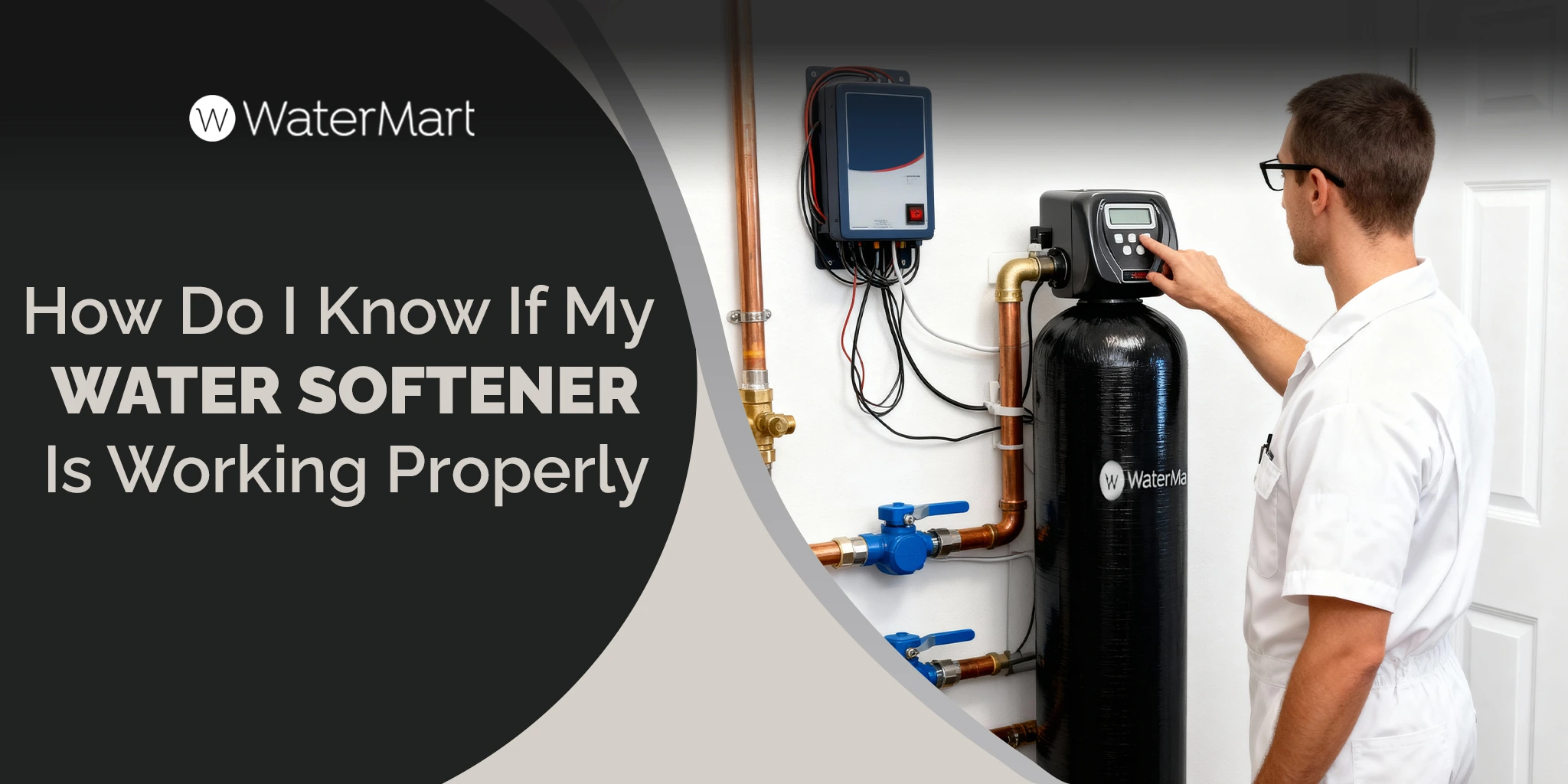
A water softener is a water filtration system that removes the hard minerals from the water and replaces them with sodium ions through a process known as ion exchange process. Salt-based water softeners consist of two main tanks, one with resin beads that swap mineral particles with sodium ions, and the other is a brine tank that regenerates the resin beads(Cleaning process). Both tanks are controlled by a control valve that handles the ion exchange and regeneration process periodically.
With this technique, hard water passes through a bed of resin, and in the process, calcium and magnesium ions get replaced with sodium ions. Thus, soft water is obtained that does not lead to scale buildups or poor lather or skin & hair dry type problems.
What Is a Water Descaler?
A water descaler, also called a water conditioner, helps manage hard water by changing how minerals like calcium and magnesium behave in the water. Instead of removing these minerals, it alters their structure so they don’t stick to pipes or appliances and form hard limescale. For a closer look at how this is compared to a water softener, explore its key functions and benefits.
The minerals stay in the water but pass through easily, making descalers a salt-free, low-maintenance way to reduce scale problems without changing your water quality. This is usually achieved by using electromagnetic or magnetic fields.
You can either choose an electromagnetic descaler or a template-assisted crystallization descaler.
Water Softener vs. Descaler: The Key Differences
After knowing you need a water filtration system, the right approach is to test the water quality and then get professional help. Our experts at Watermart provide complete water testing and give the right advice on which filtration system you must choose.
The whole comparison about water softener vs descaler most of the time leaves homeowners confused about their selection. Looking at both systems more closely helps to determine which option really meets your needs.
Hardness Removal and Scale Prevention
The main difference in a Water Descaler vs Water Softener comparison is that the softener removes calcium and magnesium completely through ion exchange, while a descaler alters the behavior of these minerals without removing them so that they become inert and promote no scale formations. The selection is based on the preference for hardness removal or scale management.
In short, water softeners get rid of hardness, and descalers decrease the scale.
Salt-Based vs Salt-Free
Water softeners need salt and refilling from time to time. This leads to softened water containing added sodium. Electronic anti-scale systems or descalers, on the other hand, are saltless and chemically unprocessed; thus, they are attractive to customers whose concern is low-maintenance or eco-friendly solutions.
Installation, Maintenance, and Operating Cost
Water softeners and water descalers come with different installation and maintenance costs. Water softener installation, maintainance and operating costs are higher in terms of initial cost, use of salt and water, and refilling requirements of salt. It also costs monthly salt, excessive water, and energy consumption. The whole system needs consistent monitoring for the water softening and regeneration process.
A whole-house water descaler is easier to install, has less initial cost, and is done most often without cutting pipes or minimal plumbing work. It requires very little maintenance and has low operating costs. The choice depends upon your budget, requirements, initial hardness levels of input water, and the end goals you want to achieve.
Environmental Impact
Water softeners release brine byproduct as a result of regeneration, which could affect the treatment of wastewater. Descalers, on the other hand, do not produce any wastewater, consume very little or no electricity at all, and are thus seen as more eco-friendly. If you need water conditioning at small scale, choosing a descaler is a good option. For whole-house water filtration requirements, water softeners are best, especially in areas with higher hardness levels.
Effectiveness in Different Water Conditions
Water softeners are effective at any level of hardness and are a top choice when users need clean, soft water for whole-house water usage. Descalers show their best performance under limited hardness conditions. If hard mineral levels are extremely high, softeners are still the most trustworthy ones. On the other hand, descalers can only handle low-hardness level water.
Effects on Household and Appliances
Both systems offer the same benefits for households and appliances. Your laundry becomes shiny, you can enjoy good soap and detergent lather, with healthy skin and hair. Also, there are no calcification signs on your dishes, floors, pipes and appliances. Water softeners eliminate scale and hence protect pipes and appliances. Water descalers also take care of the plumbing by preventing scaling from happening. Therefore, water heaters and pipes will enjoy a longer lifespan.
Effects on Water Quality
The superior quality of water after softening has led many to compare RO water and mineral water for taste and health benefits. You get clean, soft water with a low hardness level. The taste of water is good, and the water has no hard minerals like calcium or magnesium, but a little higher sodium levels. Whereas, descalers condition the water and make the hard minerals inert to prevent scaling. The water hardness and taste remain the same, and the GPG count does not drop. So you can say the water softeners provide long-term benefits and allow you to get clean, soft, and drinkable water. If your only concern is saving your plumbing and appliances from scaling, you can choose a descaler instead.
Taste, Odor, and Clarity
Water softeners offer a better-tasting water with a little salt flavour(higher sodium levels). It is clean, pure from hard minerals, and has no odor or smell. A water descaler does not remove any hard minerals or heavy particles from the water, so its taste, mineral content, and odor remains unchanged. If your preference is clean drinking water, choose a water softener over a descaler. Descaler serves to prevent the scale rather than giving clean drinkable water. So your choice depends upon your requirement.
Contaminants Removed
Prior to deciding on a system, it is vital to understand what remains in the water and what gets removed. The comparison below, a water softener efficiency comparison with a water descaler, indicates which impurities each system can handle.
| Contaminant Removed | Water Softener | Water descaler |
| Calcium | Yes | No |
| Magnesium | Yes | No |
| Limescale | Yes | Prevents Buildup |
| Sedement | No | No |
| Chlorine | No | No |
| Heavy Metals | No | No |
Advantages and Disadvantages of Water Softeners and Descalers
In the house, both systems contribute to better water usage, yet their methods are quite contrary to each other. There are several differences between water softeners and a descaler. Both systems have their own pros and cons as well.
Water Softener Pros
- Complete hardness removal.
- Proven and consistent performance
- Improves soap efficiency and cleaning
Water Softener Cons
- Salt and water consumption
- Higher installation and maintenance costs
- Sodium added to water
Water Descaler Pros
- It is a salt-free process that involves low maintenance
- Water Descaler Installation is quite easy
- It is an eco-friendly process and thus cost-effective
- All the minerals beneficial to health are retained
Water Descaler Cons
- It does not decrease the water hardness level
- The results depend upon the water chemistry
- The drinking quality of water is compromised in terms of mineral content, odor, and taste
Final Verdict
Ultimately, the decision of water softener vs descaler is really about the water hardness level and the way you want to handle hard water. A water softener is the one that gives proven results if you want long-term results for your appliance safety, clean drinkable water, soap efficiency, and good health benefits.
On the other hand, a modern water descaler can be a practical fit if you go for a salt-free, low-maintenance solution that controls scale for your plumbing pipes and appliances.
Water quality across Canada is not uniform, plus each house has its own water quality characteristics. To make the right choice of the system, it is advisable to get water testing followed by professional help to choose the right filtration system. If you are confused about choosing the right system, schedule a complimentary water test with the professionals from WaterMart. Our personnel will examine the quality of your water and suggest the best home water treatment solution according to your requirements.
FAQS About Water Softener vs Descaler
Yes, water descalers do work by altering the hard minerals’ properties to make them inert in a plumbing system, avoiding scale formation.
A descaler is only effective when the input water hardness is comparatively low, and the end goal is scale prevention. For long term benefits and whole-house water needs, a water softener is always the best option.
A water softener removes calcium, magnesium, and other minerals from water using an ion exchange method, while a scale remover(descaler or water conditioner) changes the structure of the hard minerals so that they don’t stick, preventing the buildup of scale.
Yes, descaler and water softener both can be used to get the good effects of both systems. A water softener is used to soften the water, whereas a water descaler is used to prevent the scale buildups in plumbing areas where a water softener is less effective. There are many systems that offer both a water softener and a descaler working togather but it is redundant and unnecessary.
Both systems have different purposes. A water softener is applied for the whole household’s water needs, where you can use it for laundry, drinking, cleaning, and in water heaters and dishwashers. A water descaler is used where the hardness level is a bit low, and scale prevention is the main consideration. Descaler conditions the water, but the mineral content remains the same, so it is best used where you need scale buildup prevention.
You can descale your appliances to increase their performance, as a water softener does not remove the pre-existing scale; it just prevents further scale build-up. A water softener stops further scale buildup by providing soft water, whereas an organic or electronic descaler (vinegar or electronic) helps to descale and remove the pre-existing scale.
No, water descalers are not a substitute for a water softener. Water softeners remove the hard minerals from the water, making it pleasant, soft, and drinkable, whereas a descaler prevents the scale buildup by conditioning the hard minerals. These minerals are not removed by the descaler in water, and they stay in water, accumulated together forming large crystals that don’t stick to anything.