Water Softener Leaking Water? Common Causes & Ways to Prevent Leaking
It’s frustrating to find your water softener leaking water, and it can be hard to tell if the issue is a minor fix or requires a full replacement. Most leaks result from a component failure, such as a cracked mineral tank, a damaged brine tank, a faulty control valve, or a clogged drain line. Each of these parts is crucial for the proper operation of the water softener system.
To understand the system’s function: Hard water enters the resin tank for the removal of calcium and magnesium. The brine tank is responsible for flushing out these trapped minerals during the regeneration cycle, while the control valve manages the water flow throughout the entire process.
While regular maintenance is key to preventing leaks, if a leak has already occurred, you should first identify why your water softener is leaking before following the subsequent repair steps.
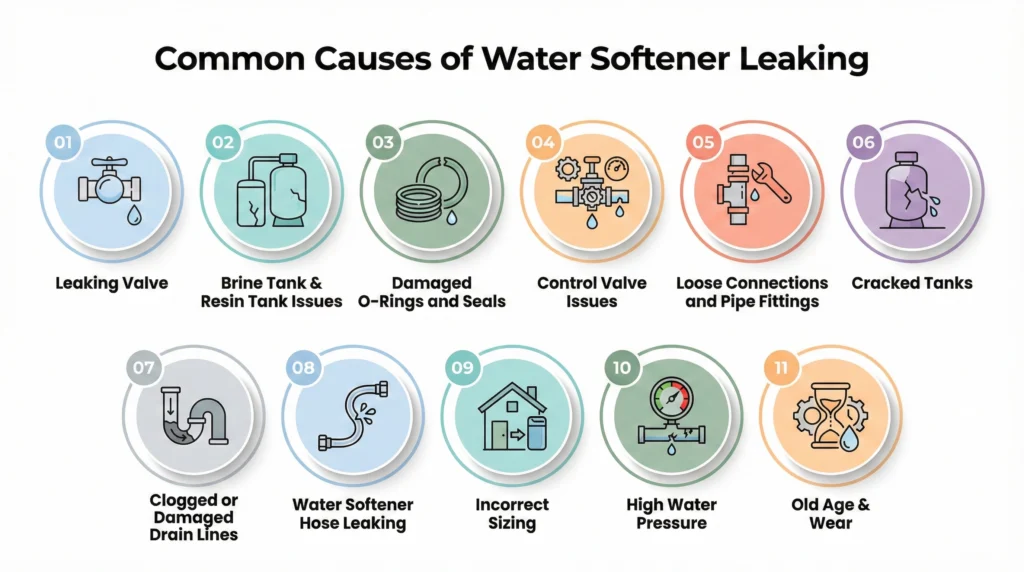
Common Causes of Water Softener Leaking
When your water softener starts leaking, the first step is to pinpoint the location and cause of the problem. The issue, which is generally repairable, likely falls into the following categories.
Leaking Valve
Valves control how water enters, exits, and cycles through your softener, so this is the first place to check for leaks. Look behind the control head for the bypass valve and at the top for the rotor valve. Notice if they have developed cracks, are misaligned, or have worn-out O-rings or a failing piston. Tightening may provide temporary relief, but professional repair or replacement is required.
Brine Tank & Resin Tank Issues
You might be familiar with these tanks: the brine tank and the resin tank. Over time, both can experience wear. Check the brine tank for overfilling, salt bridges, or clogs. A water softener leaking from the overflow occurs when the float valve in the brine tank is broken. Leaks around the resin tank mean it needs replacement. For the brine tank, adjust the salt yourself, but if that doesn’t work, expert cleaning or float valve replacement is required.
Damaged O-Rings and Seals
O-rings and seals are between connecting parts and prevent water from escaping. So inspect areas where components join and look for slow drips. These rubber pieces lose their sealing capability due to wear from pressure, minerals, and age. You can book a water softener leak repair, which typically involves replacing the rings. Professionals always conduct a comprehensive inspection to prevent further hidden failures.
Control Valve Issues
The control valve at the top of the tank controls softening and backwashing. A water softener leaking during regeneration often signals valve failure. Any control valve damage, such as stuck pistons, worn seals, malfunctioning timers, or electronic glitches, can cause leaks. Resetting may help, but internal damage requires professional repair to restore proper cycling and sealing.
Loose Connections and Pipe Fittings
Connections at the inlet, outlet, bypass valve, and drain lines can loosen over time due to constant vibration and pressure. Even a slightly loose nut can create dripping around the plumbing joints. Carefully tighten fittings with a wrench after putting the unit in bypass. If the leak persists, internal wear or misalignment is likely, and repair is needed.
Cracked Tanks
If you’ve recently tried DIY cleaning, you might’ve accidentally punctured your tank while breaking up salt bridges. A water softener salt tank leaking can be identified by checking for visible cracks, especially around the bottom and sides. Do not try to patch it up; a crack indicates a replacement is necessary to prevent further water damage.
Clogged or Damaged Drain Lines
Drain lines remove wastewater during regeneration. Sediment buildup or clogs in the drain line can force water back into the system, causing leaks or overflow. Follow the drain line from the softener to the discharge point and check for kinks, buildup, or loose brine tubing. Flush to clear minor clogs, but if that doesn’t work, call experts.
Water Softener Hose Leaking
The hoses connected to your home’s water supply work best. Over time, they can crack, become brittle, or develop kinks, which force water out at weak spots and cause leaks. If you see moisture or splitting along the hose, the line must be replaced promptly.
Incorrect Sizing
A common issue, especially with DIY setups, is incorrect sizing. An undersized water softener is constantly overworked, leading to excessive strain and potential leaks. To resolve this, compare your household’s actual water usage against the unit’s capacity listed on its label. The solution involves professional installation of a unit appropriately sized for your home’s water demand.
High Water Pressure
If your home’s water pressure consistently exceeds 60-80 PSI, you’re straining your softener’s seals, connections, and tanks. That excessive pressure pushes apart connectors and fittings, and you’ll hear loud noises as water slams against tank walls. Grab a pressure gauge from the hardware store, test your pressure, and install a pressure regulator on your main water line for protection.
Old Age & Wear
Eventually, everything wears out. If your water softener is over 10-15 years old, its components have likely degraded due to years of mineral exposure and pressure cycling. Expert replacement of the aging unit is the solution.
Ways to Prevent Water Softener Leaks
Now that we’ve reviewed common causes and basic fixes, let’s look at how to prevent water softener leaks in the future.
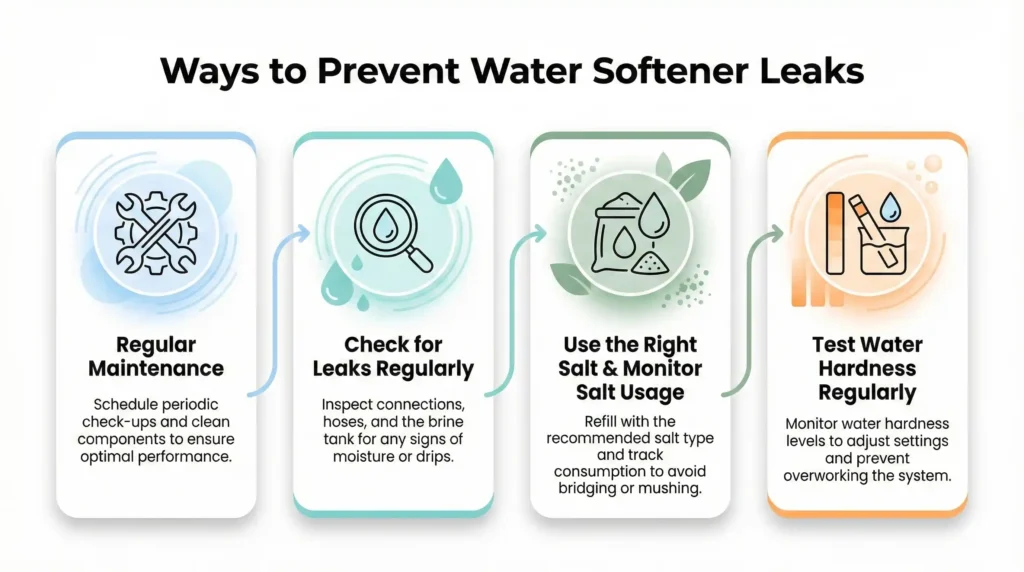
Regular Maintenance
Most leaks are caused by failing to clean or replace the water softener’s parts on time. Routine maintenance of the unit helps prevent leaks by removing salt and mineral buildup that blocks pipes or valves. While you can follow water softener troubleshooting tips yourself, you can also schedule professional maintenance every 6 months.
Check for Leaks Regularly
Take a minute each week to check the unit for moisture, drips, or puddles. Catching leaks early protects flooring, walls, and cabinets from hidden water damage and costly repairs.
Use the Right Salt & Monitor Salt Usage
Use high-purity salt and fill the brine tank correctly. Overfilling with salt can cause leaks, and underfilling can form salt bridges. Understanding what happens when a water softener runs out of salt helps you avoid unnecessary regeneration cycles and hard-water problems.
Test Water Hardness Regularly
Knowing the hardness levels and adjusting the water softener unit settings helps deliver consistent performance that is best for your house. To get precise results, book a free professional water test with WaterMart across Canada.
What to Do if a Water Softener Is Leaking
If your water softener shows signs of leaking, start with these steps immediately to prevent further problems:
Turn off the water supply
Shut off the main water supply or switch the bypass valve to stop the leaking. This limits damage and gives you time to inspect safely.
Inspect the unit
Next, inspect the system carefully, checking for loose fittings, cracked components, or wet spots around the base, as small connection issues often cause leaks.
Clean and check the brine tank
Open the brine tank and remove any hardened salt, sludge, or debris that may impede flow. Confirm the float moves freely and the water level sits where it should.
Restart And Observe
After addressing any visible issues, slowly turn the water back on and monitor the unit closely. Identify where dampness begins to form, or whether it occurs only during the regeneration cycle, to pinpoint issues.
Call In Experts If Necessary
If leaks persist, avoid deep DIY plumbing repairs, as even minor misalignments can cause costly installation faults. Book a professional repair to stop water loss and protect your home.
Signs You Should Replace Your Water Softener
Sometimes a leak indicates that your water system is failing and has reached the end of its service life. If you see any of these signs alongside the leak, it’s time for a replacement.
- Your unit is over 10 years old and no longer performs as it did before.
- You notice weaker water pressure during daily tasks like showering or washing.
- You are adding salt far more often than you used to.
- Your clothes look dull, feel rough, or start fading faster.
- White scale forms on faucets, kettles, and around drains.
- Your skin feels dry, and your hair feels lifeless after washing.
- Regeneration cycles are taking longer than normal.
- Your dishes come out spotted, cloudy, and never fully clean.
Trust WaterMart Experts for Professional Maintenance
From 30+ years of working with softeners, we can tell you most leaks people see started long before the water showed up on the floor. Small warning signs get ignored, then turn into damage, wasted water, and frustration. That’s why it’s always recommended to have a professional inspect the system, especially if you’re seeing water pooling. At WaterMart, our trained technicians arrive quickly anywhere in Canada and resolve minor issues on-site if needed. If you want the system to run reliably again, getting expert service is the smartest move you can make.
FAQs
Yes, they can, usually from loose fittings, damaged seals, faulty valves, or cracked tanks.
Leaks at the top usually mean you have old O-rings, a cracked rotor valve, or loose connections. Check near the bypass valve and hoses.
A leak from the bottom typically points to a cracked resin or brine tank. It might be due to high water pressure, or the unit is just old.
You might be adding too much salt. This can cause an overfilled tank, salt bridge, or stuck float valve, which makes water leak after you add salt.
No, even small leaks lead to mold, floor damage, and high water bills, so it is best to shut off the system and get it fixed.
Yes, amateur fixes often cause more damage or void warranties.
Brine tanks leak due to stuck float valves, salt bridges, or clogs in the injector. Any one of these issues can cause the water to overflow from the tank.
The drain line’s probably kinked. It could also be due to loose hose clamps or backpressure from a clogged pipe that forces water out of fittings.