RO Water vs Mineral Water: Health Benefits, Minerals & Safety
Concerns about drinking water often begin with contamination, which can include the presence of bacteria, chemicals, or heavy metals that increase the risk of waterborne illnesses. At the same time, people want water that supports daily nutrition, since water directly affects hydration and digestion.
This creates confusion when choosing the right option. On one side, reverse osmosis water focuses on purity by removing nearly all contaminants. On the other hand, mineral water retains naturally occurring minerals from springs and wells. Comparing mineral water vs RO water helps you know which option to choose for your health, taste preferences, and environmental impact.
What is RO Water?
Reverse Osmosis (RO) water is drinking water purified through a controlled filtration process. In a typical RO system, water is pushed under pressure through a semi-permeable membrane. This membrane blocks dissolved solids, bacteria, chemicals, and heavy metals and lets clean water molecules pass through. RO process removes all contaminants (99%) commonly found in tap or well water that affect safety and taste. It removes heavy metals (lead, arsenic, mercury), chlorine, PFAS compounds, microplastics, pesticides, and all contaminants.
Membran filters work at a very fine level, so healthy and naturally occurring minerals are also removed. The result is mineral-free, consistent water. RO units are available as under-sink, countertop, and whole-home systems and are widely used in homes across Canada for daily drinking and cooking.
What is Natural Mineral Water?
Natural mineral water comes from deep underground springs or wells where water collects over long periods of time. As it moves through rock and soil, it naturally absorbs minerals like calcium, magnesium, potassium, and sodium. These minerals stay in the water and influence both its taste and nutritional value.
Unlike regular tap water, mineral water does not come from municipal supplies or added treatment chemicals. In Canada, it must meet certain standards to be called “natural mineral water”. Standards are, it must be safe to drink at the source and contain a stable level of naturally dissolved minerals (over 250 ppm). Only minimal treatment (like filtration or UV sterilization) is allowed to keep its original composition intact from source to bottle.
Comparison of RO Water and Mineral Water
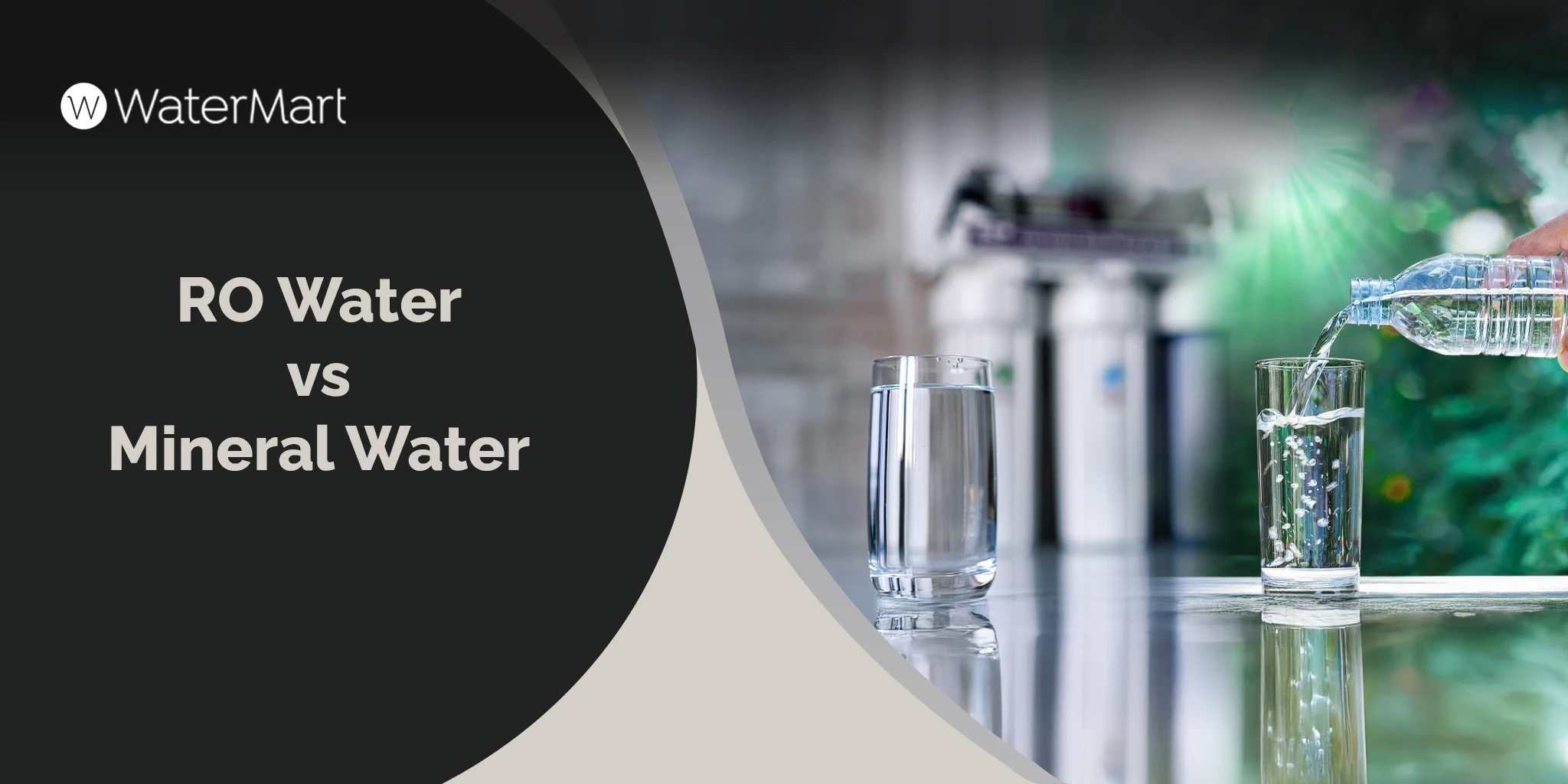
Now that you know what types of water they are. The right choice depends on priorities, since RO focuses on safety and consistency, while mineral water emphasizes natural composition and inherent mineral content. Here’s an overview of the comparison:
| Aspect | RO Water | Mineral Water |
| Source and Processing | Tap or groundwater filtered through a reverse osmosis membrane | Protected underground springs or wells with minimal treatment |
| Nutritional Content and Minerals | Minerals largely removed (need an add-on for mineral addition) | Naturally contains calcium, magnesium, potassium, sodium |
| Safety & Health Benefits | Strong protection from bacteria, chemicals, and heavy metals | Supports mineral intake and hydration when sourced correctly |
| Taste and Flavor Differences | Neutral taste that may feel flat | Fresh taste shaped by natural mineral profile |
| Contaminant Removal | Removes up to 99% of dissolved contaminants | Depends on source protection and bottling standards |
| Cost Comparison | Higher setup cost, lower long-term cost | Higher per-litre cost due to bottling and transport |
| Environmental Impact | No plastic bottles; some wastewater during filtration | Plastic waste and higher transport emissions |
| Convenience and Availability | On-demand water at home after installation | Easy to buy, requires ongoing purchases |
Busting Myths on RO & Mineral Water
Although definitions of both types of waters are simple, there are some misconceptions and marketing claims around RO and mineral water. We’ve cleared some top myths that customers wonder about regarding the installation of RO or the use of mineral water.
Bottled water is safer than reverse osmosis water
The safety of mineral or bottled water depends on the source and handling. RO systems certified by standards like NSF/ANSI are often more effective at removing contaminants than standard bottled treatments.
RO water is harmful because it lacks minerals
RO water lacks minerals by design, but minerals in water contribute a small proportion of daily requirements. A balanced diet meets most mineral needs. If paranoid, remineralization stages can also restore them in RO water.
RO water is unhealthy due to mineral removal or acidity
While RO reduces pH slightly, the body’s regulatory systems maintain internal pH. Slight acidity does not inherently pose health risks for most people.
Natural mineral water is just a trend
Natural mineral water’s value lies in its electrolyte content and flavor profile, not trendiness. It remains a staple in many cultures due to natural content that supports hydration and bone health.
Natural mineral water is always clean and safe
Natural mineral water that is bottled isn’t automatically clean or safe. Source geology, minimal treatment, storage conditions, and regulatory oversight all affect quality, and contamination or microplastics can still be present. Choose reputable brands and check labelling.
Who Should Prefer RO Water?
RO water makes sense when purification matters more than mineral intake, especially in places where source water quality cannot be trusted for direct consumption. Here’s who should choose RO water:
- Homes dealing with high TDS, heavy metals, chemical runoff, or microbial risks benefit from RO systems because standard filters fail at this level.
- Households managing kidney conditions or immunity concerns often choose RO water for predictable purity, since even small contaminants can create long-term issues.
- People moving away from bottled water prefer RO for consistent results at the tap, with mineral cartridges added when long-term daily use is planned.
If you’ve decided to go with RO Water. Make sure you’ve enough information about how much does a reverse osmosis system cost?
Who Should Prefer Mineral Water?
Mineral water fits better when you know that the source is clean and the goal is daily hydration with good flavour and natural mineral intake. Here’s who should choose mineral water:
- Regular drinkers who want mineral water health benefits with inclusion of calcium, magnesium, and potassium. Preferably, if diet alone does not cover mineral needs.
- Areas with safe spring sources make mineral water practical for everyday use, since taste, balance, and hydration matter more than deep purification.
- Active routines often favour mineral water because natural electrolytes support hydration without relying on added drops, powders, or supplements.
This preference usually comes down to how much treatment your water needs, which is why comparisons like Distilled vs RO water help clarify when purification matters more than mineral retention.
Tips to Get the Purest Water Possible
Reverse osmosis delivers the purest drinking water available when paired with pre-filtration and post remineralization, or installed as a ready-to-drink tap through a whole home system setup. Here are some tips:
Know the Source of Your Water
Check your city’s official site for annual water reports, search “Water Quality Report,” “Drinking Water Report,” or “Consumer Confidence Report.” Provincial sites or Canada.ca provide extra details. Reports list the water source, lake, river, or groundwater, treatment steps, and quality data meeting federal and provincial standards.
Test Your Water Regularly
Testing gives clear proof of what is in your water and how treatment performs. Lab tests suit wells and new homes. Need more specific testing, book a free test today with us at Watermart. Strips track basics like pH and chlorine. A TDS meter shows dissolved load, with lower readings indicating higher purity across different seasons and conditions.
Choose the Right Filtration System
Match filtration to your source and goals since no single system covers all risks. Carbon filters reduce chemicals and taste issues. RO removes dissolved solids and metals. UV handles microbes. Combining stages delivers balanced protection without unnecessary complexity for daily drinking, cooking, bathing, and long-term use.
Replenish Essential Minerals
Highly purified RO water removes calcium and magnesium along with contaminants. Over time, this can affect electrolyte balance. Add minerals back using a remineralization cartridge or drops. Mineral-rich water supports bones, heart function, muscles, and digestion for long-term daily health and nutrient intake.
Avoid Contaminants from Containers
Storage choices matter because pure water absorbs substances easily. Use glass or stainless steel for holding drinking water. Avoid long-term plastic storage. Keep containers sealed to limit gas absorption and preserve water quality during home storage, travel, refilling, and daily household use situations overall.
Consider Whole-Home Filtration
For complete coverage, whole-home filtration treats water at the entry. Every tap delivers filtered water for drinking, bathing, and cooking. This reduces scale buildup and protects appliances. Many homeowners choose WaterMart whole home systems for tailored, reliable treatment across varying water sources, household sizes, nationwide.
Conclusion | Mineral Water vs RO Water
Deciding which water is healthier (RO water vs mineral water) depends on your priorities and water quality. Choose mineral water for natural minerals, hydration, and taste. Go for RO water for maximum contaminant removal and safety, especially if your area has poor water quality and waterborne illnesses. Long-term RO use should include mineral supplementation.
For clarity on your local water quality, take advantage of WaterMart’s free water testing services, helping you make an informed choice and ensuring every glass you drink is safe, pure, and tailored to your health.
FAQs About RO Water vs Mineral Water
RO water removes contaminants for maximum safety. Mineral water keeps calcium and magnesium for nutrition. Neither is universally better. The right choice depends on your local water quality.
Natural mineral water usually tastes richer because dissolved minerals add flavour. RO water tastes neutral or flat since minerals are removed. Some people prefer mineral taste, while others like clean water.
No. RO water health effects depend on diet and usage. RO water is very pure but low in minerals. Mineral water adds nutrients, but sodium levels and quality vary between brands.
You can drink both daily. RO water works best with remineralisation. Mineral water supports mineral intake. Many people alternate or use mineral-enriched RO water for balanced, safe daily hydration.
RO water is safe to drink & removes harmful impurities. It also removes some natural minerals, but this is not harmful if you get minerals from food or use a remineralization filter. Overall, RO water is healthy.