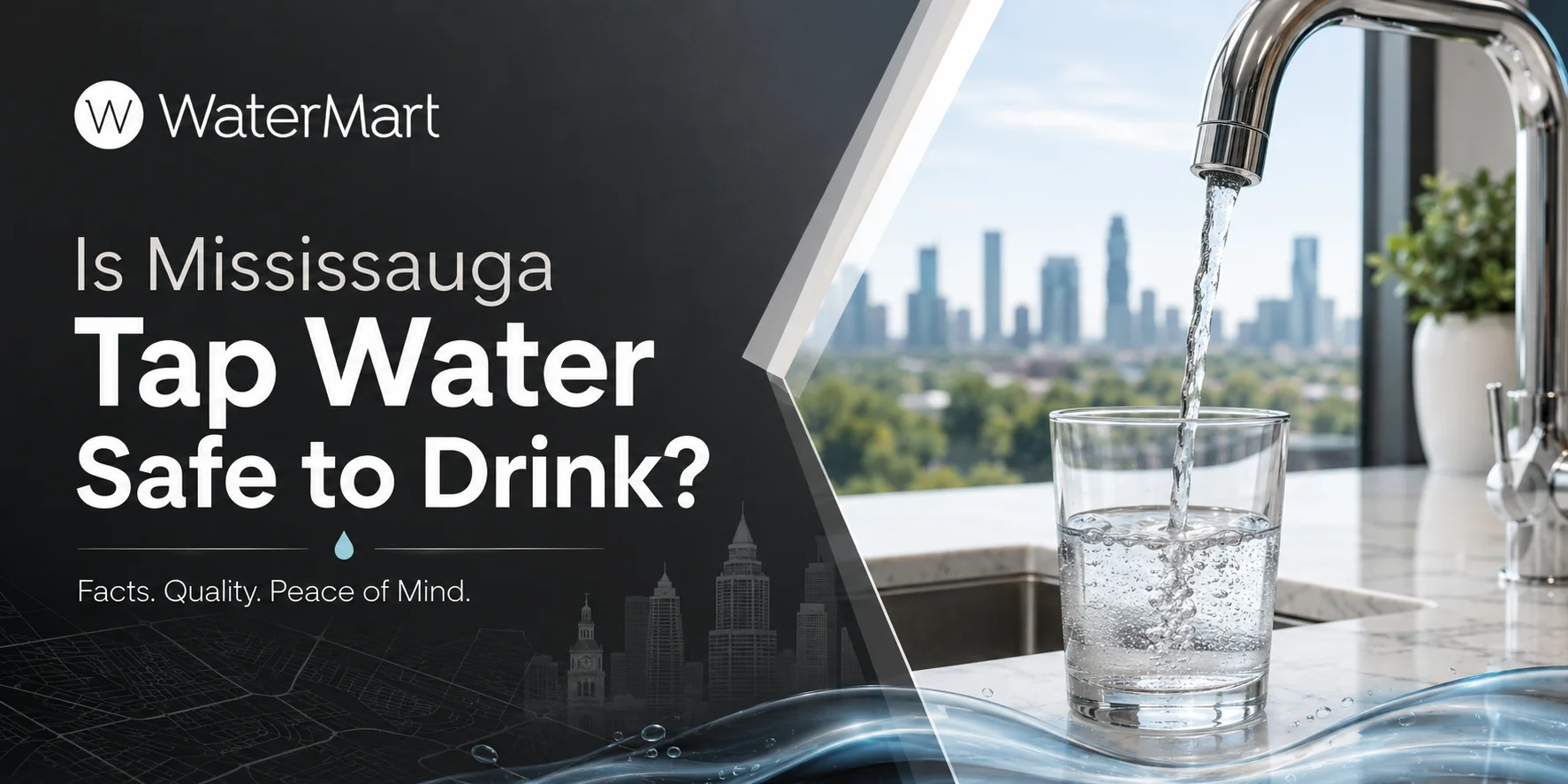
Is Mississauga Tap Water Safe to Drink?
Yes, Mississauga tap water is generally safe to drink, as its municipal water is treated and tested to meet Ontario’s Drinking Water Quality Standards, and it consistently passes. But “safe” doesn’t mean every household experiences water the same way; pipe age, hardness, and taste can all vary from home to home.
Turn on any kitchen tap in Mississauga, and you’ll get water that traveled from Lake Ontario, through millions of dollars of treatment infrastructure, before it ever touched your glass. But with so much conflicting discussion and users complaining about a chlorine smell and lead pipes in older cities, it’s fair to wonder whether Mississauga tap water is actually safe to drink.
In this guide, we will break down where your water comes from, how it’s treated, what’s actually in it, and how you can check the quality at your own tap.
Key Takeaways
- Mississauga’s tap water comes from Lake Ontario and is treated at two Peel Region facilities: Arthur P. Kennedy WTP and Lorne Park WTP.
- The water consistently meets Ontario Drinking Water Quality Standards; in 2025, 99.99% of thousands of routine samples passed.
- Mississauga water is moderately hard, generally in the 120–130 mg/L range, which affects appliances and scale buildup but not safety.
- Fluoride and chlorine are both added at controlled, regulated levels: fluoride for dental health and chlorine for disinfection.
- Lead is not present in the source water; it can only enter through old lead service pipes or solder in homes built before 1986.
- Residents can check current water quality, test their own tap water, and inspect their home’s plumbing to catch any local issues.
Where Does Mississauga’s Tap Water Come From?
All of Mississauga’s municipal drinking water comes from Lake Ontario. Peel Region, which manages water for Mississauga, Brampton, and parts of Caledon, draws raw lake water through intake pipes. These extend up to two kilometres offshore, well below the surface where the water is generally cleaner and more stable in temperature.
That raw water is pumped to one of two treatment plants, depending on where you live in the city:
- Arthur P. Kennedy Water Treatment Plant, on the north shore of Lake Ontario, primarily serves the east side of Mississauga (as well as Brampton and parts of Caledon).
- Lorne Park Water Treatment Plant, largely built underground beneath parkland, primarily serves the west side of Mississauga.
Once treated, the water flows through thousands of kilometres of water mains, pumping stations, and reservoirs before reaching individual homes and businesses. Authorities monitor the whole system 24/7 through a computerized control system, with online sensors that can automatically shut down treatment if a problem is detected.
Is the Water Hard or Soft in Mississauga?
Mississauga’s tap water lies in the moderately hard category. According to Peel Region’s most recent water quality testing, hardness in the treated water typically falls around 120–130 mg/L (as calcium carbonate), or roughly 7.0–7.6 grains per gallon.
Hardness comes from naturally occurring calcium and magnesium dissolved in the lake water. These minerals aren’t harmful to drink, but over time, they can cause the following impacts:
- White scale or film on faucets, showerheads, and glassware
- Reduced efficiency in kettles, water heaters, and dishwashers
- Soap that doesn’t lather as easily
Importantly, hard water does not mean unsafe water. Hardness is a water-quality characteristic that affects taste, appliance performance, and household maintenance, not a health risk.
Installing a water softener really comes down to personal preference and how much scale buildup bothers you and damages your appliances and plumbing.
If you’re noticing chalky residue on fixtures, spotty dishes, or appliances wearing out faster than expected, a water softening system can address that. If hard water doesn’t affect your daily life, there’s no safety reason to install one.
Is Mississauga’s Tap Water Safe to Drink?
Yes, Mississauga’s tap water is safe to drink. It’s sourced from Lake Ontario, treated at Peel Region facilities that use multiple layers of filtration and disinfection, and tested heavily before and after it reaches homes.
In 2025, Peel Region reported that 99.99% of over 4,000 routine laboratory samples met Ontario’s Drinking Water Quality Standards, and no adverse water quality events were reported at either treatment plant serving the city.
But actually, “safe at the treatment plant” and “safe at your tap” aren’t always the same questions. Water quality can shift slightly by the time it reaches your home, especially if you live in an older building with aging pipes.
Most day-to-day complaints, like a chlorine smell, a musty taste in late summer, or occasional cloudiness, are aesthetic issues, not safety concerns, and Peel Region documents these explicitly in its public reporting.
If you want more certainty about your specific tap, testing your water directly is the most reliable way to know.
How Is Mississauga’s Drinking Water Treated?
Mississauga’s drinking water goes through a multi-barrier treatment process before it’s considered safe for consumption. Here’s how Peel Region water treatment works, starting at the source:
- Source water intake (Lake Ontario): Raw water is drawn from Lake Ontario through offshore intake pipes. As it enters the intake, a small quantity of chlorine is added to prevent mussels and bacteria from building up inside the pipes.
- Screening and low-lift pumping: The water passes through screens that filter out debris like fish, sticks, and aquatic plants, then is pumped into the treatment plant.
- Ozone treatment: At Arthur P. Kennedy WTP, ozone gas is bubbled through the water. Ozone is a powerful disinfectant that kills bacteria and breaks down compounds that cause unpleasant tastes and odors, making them easier to remove in later steps.
- Biologically active carbon (BAC): The water then passes through BAC contactors, which remove organic matter left behind after ozonation. This step helps maintain water stability and limit bacterial regrowth later in the distribution system.
- Ultrafiltration: Next, water is pulled through membrane filters with extremely small pores. This step physically removes microorganisms and fine particles, resulting in very low turbidity (cloudiness).
- Chlorination: After filtration, chlorine is added as the primary disinfectant. It’s the last line of defense against bacteria, viruses, and other pathogens, and a small residual is maintained throughout the distribution system to keep the water protected as it travels to homes.
- Fluoride, ammonia, and phosphoric acid additions: Once the water is filtered and disinfected, a few additional substances are added in carefully regulated amounts:
- Fluoride (as hydrofluorosilicic acid) is added to help prevent tooth decay, a practice used in most major Canadian municipalities.
- Ammonia is used at select points in the distribution system (for water directed to neighboring regions) to form chloramine, a longer-lasting disinfectant that helps maintain water quality over greater distances.
- Phosphoric acid or similar corrosion-control agents can be used in some systems to coat the interior of pipes and reduce the leaching of metals like lead or copper from older plumbing.
Only after passing through this sequence- screening, ozone, BAC, ultrafiltration, chlorination, and controlled chemical addition is the water sent to reservoirs and pumped out to homes and businesses across Mississauga.
What Contaminants Are Found in Mississauga’s Drinking Water?
Peel Region tests treated water for dozens of parameters every year, including metals, pesticides, herbicides, industrial solvents, and disinfection by-products. The results consistently show that Mississauga’s water stays well within, often far below, Ontario’s Maximum Acceptable Concentrations (MACs):
- Metals such as arsenic, lead, mercury, cadmium, and chromium are tested annually and typically come back below detectable limits.
- Pesticides and herbicides (like atrazine, glyphosate, and 2,4-D) are tested but not found at concerning levels; most results are below laboratory detection thresholds.
- Disinfection by-products, such as trihalomethanes (THMs) and haloacetic acids (HAAs), form naturally when chlorine reacts with organic matter in water. Recent testing shows both are well under half of their regulatory limits.
- Total dissolved solids (TDS) generally range between 160–200 mg/L, far below the 500 mg/L aesthetic guideline.
- Fluoride is maintained around 0.6–0.7 mg/L on average, below the 1.5 mg/L maximum.
Occasional isolated events, like a spike in total coliform bacteria near a hydrant or water main break, do get reported. These are addressed immediately through flushing and re-sampling, and Peel Region publishes every one of these events publicly in its annual water quality reports.
If you want a closer look at what’s actually coming out of your tap rather than relying on citywide averages, get a professional water assessment. Water treatment experts like WaterMart do it for free.
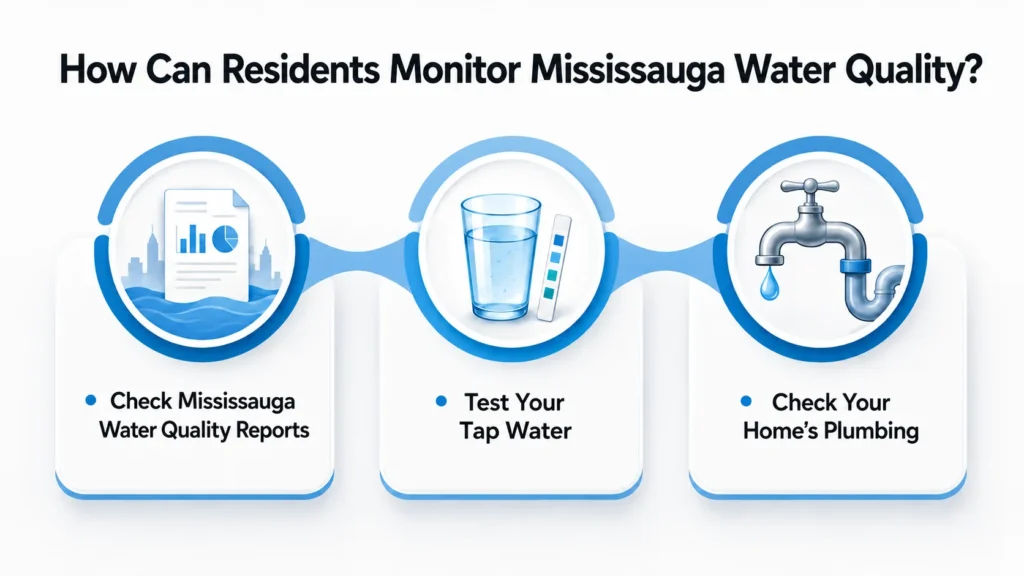
How Can Residents Monitor Mississauga Water Quality?
Look for the following factors step by step before deciding on drinking tap water as it is or getting a water treatment system.
- Check Mississauga Water Quality Reports
Peel Region publishes detailed annual water quality reports covering treatment processes, testing results, and any reportable incidents across the South Peel Drinking Water System, which includes Mississauga. These reports are publicly available and broken down by treatment plant, so residents can see exactly how their water performed over the past year.
- Test Your Tap Water
Municipal testing reflects the water leaving the treatment plant and moving through the distribution system, but it can’t account for what happens inside your own home’s plumbing.
Testing your tap water directly is the only way to know what’s actually reaching your glass, especially in older homes or buildings with aging pipes. A professional water test can check for lead, hardness, chlorine levels, and other parameters specific to your property.
- Check Your Home’s Plumbing
The age and material of your home’s pipes matter. Homes built before 1960 have the highest risk of lead service lines (banned in 1975); homes built between 1960–1986 may have lead solder (banned in 1986); and even newer homes can have lead-containing fixtures.
If you’re unsure what your plumbing is made of, it’s worth having it inspected, particularly if you notice discolored water, metallic taste or if you live in an older Mississauga neighborhood.
Frequently Asked Questions
Does Mississauga water have fluoride?
Yes. Fluoride is added to Mississauga’s drinking water supply at a controlled, optimal level to help prevent tooth decay. Treated water typically averages around 0.6–0.7 mg/L, well under the 1.5 mg/L Ontario maximum.
Does Mississauga tap water contain chlorine?
Yes, chlorine is used as the primary and secondary disinfectant throughout the treatment and distribution process. A chlorine residual is maintained in the water as it travels through pipes to prevent bacterial regrowth, and levels are regulated to stay within a safe, government-mandated range.
Why does Mississauga tap water sometimes taste or smell like chlorine? Chlorine levels can vary slightly depending on your location in the distribution system, how close you are to a treatment plant, and whether new pipes were recently chlorinated nearby. Letting a pitcher of water sit uncovered in the fridge overnight, or boiling and cooling it, can reduce the taste and smell.
Does chlorine in Mississauga tap water make it unsafe to drink?
No. The chlorine levels used are well below thresholds considered harmful and are specifically regulated to protect public health by preventing bacterial and viral contamination. Any taste or odor is an aesthetic issue, not a safety one.
Does Mississauga drinking water contain lead?
The lake water itself does not naturally contain lead. Lead can only enter drinking water through old lead service pipes, lead solder, or lead-containing fixtures within a home’s private plumbing, most commonly in homes built before 1986. Peel Region runs an ongoing ‘Community Lead Testing Program’ to monitor this and replace any municipal lead pipes found.
Can old house pipes affect drinking water quality in Mississauga?
Yes. Even if municipal water leaves the treatment plant clean, it can pick up trace metals, sediment, or bacteria while staying in old, corroded, or poorly maintained household plumbing. This is one of the main reasons water quality can differ from house to house, even within the same neighbourhood.
What is the TDS level of Mississauga tap water?
Total dissolved solids in Mississauga’s treated water generally range between 160–200 mg/L, which is considered low to moderate and well within Ontario’s 500 mg/L aesthetic guideline.
Is Mississauga tap water safe for babies and children?
Municipal tap water that meets Ontario’s Drinking Water Quality Standards is generally considered safe for babies and children, including for mixing infant formula. Because children can be more sensitive to trace contaminants like lead from household plumbing, many health professionals recommend testing your specific tap water if you live in an older home, or using a filtration system as an added precaution.
Final Verdict
Mississauga’s tap water is safe to drink. Moderate hardness, occasional chlorine taste, or seasonal odour are common but harmless characteristics of the water, not safety concerns. Where things can get less certain is inside your own home.
If you want peace of mind, or simply prefer better-tasting, filtered water, a professional assessment is the best place to start.
From there, Watermart can help you choose the right solution, whether that’s a reverse osmosis system or other customized solutions meeting your specific needs. Reach out to Watermart today to find the right fit for your Mississauga home.