How to Remineralize RO Water for Better Taste & Health?
Though reverse osmosis water is extremely pure and clean, it feels a bit flat or too plain to drink, with almost no natural taste. That’s because the ultra-effective filtration process using a 0.0001-micron membrane removes not just contaminants but also naturally occurring minerals like calcium and magnesium that give water its crisp, refreshing taste.
Because the RO process removes 99.9% of dissolved solids, additional minerals are needed to make the RO water taste natural. You can remineralize RO water for drinking using various techniques, depending on the volume required and the level of manual work you want to do. Here, we will learn how to remineralize RO water and the impact it can have on drinking water.
Key Takeaways
Why Remineralize Reverse Osmosis Water?
RO water is among the purest, as metallic contaminants such as iron, arsenic, lead, calcium, and magnesium are filtered out by a semi-permeable membrane during the process. While this purity is excellent for removing harmful substances, it leaves behind water with a neutral, sometimes even slightly acidic pH that many find unsatisfying to drink.
Beyond taste, these missing minerals(calcium and magnesium, etc.) play vital roles in your health, supporting bone strength, heart function, and overall hydration.
This is precisely why remineralization has become essential for RO users who want the best of both worlds: ultra-pure water that’s also mineral-rich, balanced, and truly enjoyable to drink. If your RO system is working fine and has no serious problems, your water is almost pure. Now, adding the lost minerals back in can benefit not only by providing clean water but also by producing healthy, mineral-rich water. Let’s review which minerals are lost during RO filtration and how to add them back.
What Minerals Are Removed During the Reverse Osmosis Process
Before we move forward to discuss remineralization techniques, review the minerals that may be removed during RO filtration. Some of the following minerals are important for good-tasting, healthy water; their absence makes the water too plain or flat to drink.
- Calcium: An important mineral for bone health
- Magnesium: Boosts nerve health and increases metabolism
- Sodium: It is stripped away with other salts
- Fluoride: Good for bone and tooth health
- Iron and manganese: Heavy metals making water hard in general
- Other ions: Nitrates, sulphates, chlorides, and bicarbonates.
As RO systems filter water by removing contaminants through a semipermeable membrane, beneficial minerals are left behind because they can’t pass through the membrane. So the resulting water is low-mineral water, which can be mineralized using the following methods.
Which Minerals Should You Add to Reverse Osmosis Water?
If you are unsure which minerals to add to Reverse Osmosis water, the simple answer is: add back what the RO system removes. We’re talking about calcium, magnesium, potassium, and a touch of sodium.
These aren’t just for flavour; they actually balance out the slightly acidic nature of pure RO water. Using healthy, mineral-rich water in the kitchen helps maintain health, reduces the risk of low immune diseases, and makes you stronger, making your RO systems more valuable.
How To Remineralize Reverse Osmosis Water?
Several methods are used to remineralize RO water. The method you choose primarily depends on your household needs, your RO system’s capacity, your water consumption habits, and your convenience preferences. Let’s discuss all the possible ways people may use.
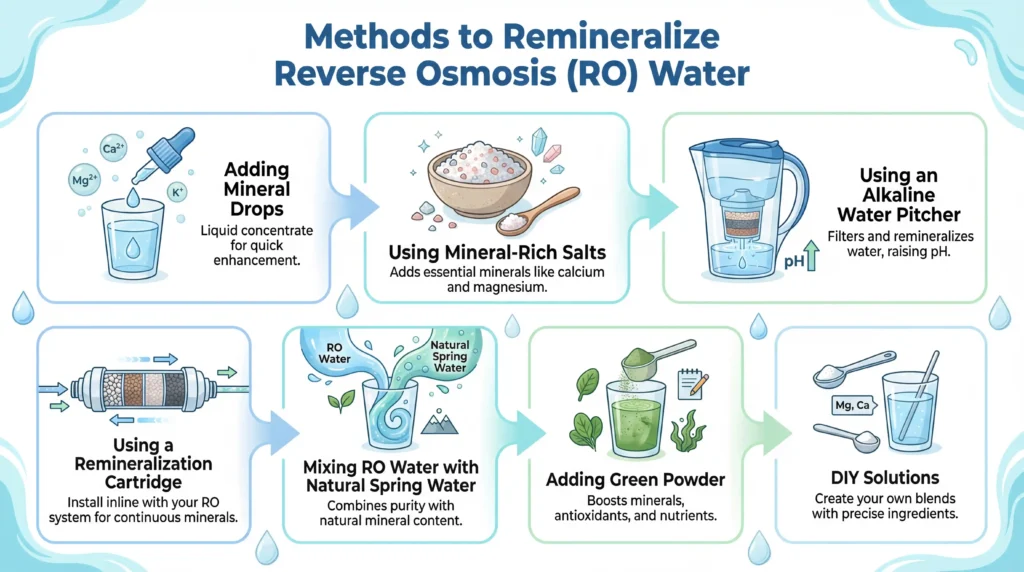
Adding mineral drops
Mineral drops are one of the easiest ways to remineralize your RO water. These small bottles contain concentrated trace minerals, such as calcium and magnesium, and electrolytes that are removed during filtration.
Simply add a few drops to each glass or pitcher of water. While this method provides flexible control over mineral intake, it requires manual effort each time. Cost-wise, expect to spend $20-$50 monthly, which can add up quickly for larger households. This is a popular method in coffee circles, where people remineralize RO water for coffee to suit their desired flavour.
Using mineral-rich salts
Himalayan pink salt is a popular choice for remineralizing RO water, containing over 80 minerals and trace elements, including calcium, magnesium, and potassium.
While it’s easy to dissolve and improves taste, there’s an important catch: to get any real mineral benefit, you’d need over 30g of salt, which far exceeds the recommended daily limit of 5g. This method may not be ideal, especially for those on sodium-restricted diets or with existing health conditions.
Using an alkaline water pitcher
Alkaline water pitchers use built-in mineral cartridges or mineral balls to reintroduce calcium, magnesium, and potassium back into your RO water while raising its pH level. They’re portable, beginner-friendly, and great for renters or small households.
However, their effectiveness varies widely by brand, and they may not fully compensate for minerals lost during RO filtration. Add in frequent cartridge replacements, manual refills, and limited water capacity, and convenience becomes a real concern.
Using a remineralization cartridge
A reverse osmosis remineralization filter is honestly the most hassle-free way to add minerals back into your RO water. Installed as the final stage in your RO system, this remineralization cartridge automatically reintroduces beneficial minerals as water flows through, with no manual effort required.
This makes it perfect for busy households wanting clean, great-tasting, mineral-balanced water straight from the tap. Plus, it supports your overall RO system performance and maintains consistent water quality over time.
WaterMart offers RO systems with built-in reverse osmosis remineralization filters, taking the hassle of manual work away from you. Call us for a quote or a consultation to help you understand the process and find the perfect system for your home.
Mixing RO Water with Natural Spring Water
Mixing RO water with a mineral-rich water source is another simple way to restore mineral balance and achieve a healthy TDS of 80-150 ppm. However, the biggest downside is that blending can reintroduce contaminants from your tap water.
Additionally, this method undermines the purpose of an RO system. If you choose this method, always test your water source first and ensure it’s safe and reliable before mixing.
Adding green powder
If you prefer a more natural, plant-based approach to remineralizing your RO water, green powders are worth considering. These blends combine nutrient-dense vegetables and fruits, such as kale, spinach, broccoli, wheatgrass, and berries, which naturally provide minerals and other essential nutrients.
Simply add the powder directly to your water, tea, soups, or salads. It’s a flexible and nutritious option, though keep in mind it slightly changes the taste of your water.
DIY Solutions
If you prefer a budget-friendly approach, several DIY solutions can effectively remineralize your RO water at home. Adding a small amount of baking soda raises pH, while dissolving food-grade calcium and magnesium supplements in water restores essential minerals.
Some people also place clean mineral rocks like quartz or limestone in their water pitcher overnight. These methods are affordable and easy to try, but always research proper dosages carefully to avoid overdoing it.
| Methods | Ease Of Use | Pros | Cons |
| Adding Mineral Drops | Easy | You can control mineral intake and adjust concentrations according to your needs | Expensive, needs manual efforts on a daily basis. |
| Using Mineral-Rich Salts | Easy | Easy, controllable, and can be adjusted as per needs. | Needs manual efforts, mineral concentration may increase from the desired value when used randomly. |
| Using an Alkaline Water Pitcher | Moderate | Portable, beginner-friendly, raises pH levels | Frequent cartridge replacements, limited water capacity, and effectiveness vary by brand |
| Using a Remineralization Cartridge | Very Easy | Automatic, no manual effort, consistent mineral balance, tap-ready | Needs replacement, limited mineral control. |
| Mixing RO Water with Natural Spring Water | Moderate | Naturally restores mineral balance, a simple method | Can reintroduce contaminants, requires water testing, costly over time |
| Adding Green Powder | Easy | Plant-based minerals are nutritious and versatile for use | Alters water taste, not specifically designed for remineralization |
| DIY Solutions | Moderate | Budget-friendly, easily available ingredients | Unreliable long-term, risk of overuse, can cause digestive issues |
Does Remineralization Make RO Water “Less Pure”?
No, remineralization does not make RO water “less pure”. Once you remineralize RO water using a safe method, you get the best of both worlds: pure water rich in minerals.
When you remineralize, you’re not adding harmful contaminants; you’re intentionally and carefully reintroducing beneficial minerals your bodyneeds. This is a fully controlled process, unlike unfiltered tap water, which contains minerals and potentially harmful substances.
What Are The Benefits of Remineralizing Reverse Osmosis Water?
Remineralizing your RO water adds back important minerals like calcium and magnesium that your body needs to stay healthy. It also improves the flat taste of RO water and balances its pH, making it safer and more enjoyable to drink every day. You get clean, pure, and naturally nourishing water.
- Improved taste: Remineralized RO water tastes much better than flat, pure RO water because minerals like calcium and magnesium add a naturally crisp and refreshing flavor. Without these minerals, RO water often tastes neutral or slightly bland, which many people find unsatisfying to drink.
- Maintain healthy blood pressure: Minerals like magnesium and potassium in remineralized water help regulate blood pressure by supporting proper heart function and blood vessel relaxation. Regular intake of these essential minerals through drinking water can contribute to better cardiovascular health over time.
- Healthy digestion: Remineralized water contains calcium and magnesium that support digestive enzyme function and help maintain proper stomach acid balance. These minerals also promote healthy gut motility and can prevent digestive discomfort caused by drinking completely demineralized water.
- Improved hydration: Water with balanced mineral content is absorbed more efficiently by your body’s cells compared to completely pure RO water. Electrolytes like sodium, potassium, and magnesium in remineralized water enhance cellular hydration and help maintain optimal fluid balance.
- Optimal body function: Essential minerals restored through remineralization support critical bodily functions, including nerve signaling, muscle contractions, and bone strength. Your body relies on these minerals daily for hundreds of enzymatic reactions and metabolic processes.
- Boosts pH levels: Remineralization raises the pH of acidic RO water from around 5-6 to a more neutral 7-8 range, creating alkaline water. This balanced pH is gentler on your body and may help neutralize excess acidity in your system.
- Protects Plumbing: Completely demineralized RO water can be corrosive to pipes and plumbing fixtures because it aggressively seeks to absorb minerals from any surface it contacts. Adding minerals back creates stable water that won’t leach metals from your pipes or damage your home’s plumbing system.
- Prevention of Mineral Deficiencies: Drinking remineralized water regularly helps you meet daily mineral intake requirements alongside your diet, especially for calcium and magnesium. Long-term consumption of completely demineralized water may contribute to mineral deficiencies that affect bone health and overall wellness.
Common Mistakes When Remineralizing RO Water
While remineralization can help restore water’s premium qualities and functionality, overdoing it can diminish the benefits you need.
Adding Too Many Minerals
Adding too many minerals creates a bitter, chalky taste and can cause digestive problems. It also destroys the purpose of having purified RO water in the first place.
Inconsistent Dosing
Using different amounts each time leads to unpredictable water quality and taste. Your body needs consistent mineral intake for proper hydration and health benefits.
Ignoring pH and Alkalinity Balance
Focusing only on minerals without checking pH can make water too acidic or too alkaline. Both mineral content and pH balance matter for truly healthy drinking water.
Overlooking Calcium–Magnesium Balance
The ideal calcium to magnesium ratio is around 2:1 or 3:1 for proper absorption. Ignoring this balance means you won’t get the full health benefits.
Not Testing Water After Remineralization
Without testing, you can’t know if your mineral levels and pH are actually safe. Use a TDS meter or pH strips to verify your remineralization is working correctly.
FAQs About Remineralizing Reverse Osmosis Water
Ideal TDS for RO drinking water is around 80-150 ppm for optimal taste and mineral content.
No, remineralization is optional, but it improves taste, pH balance, and adds beneficial minerals back into your water.
Yes, remineralized RO water is healthier because it contains essential minerals like calcium and magnesium that support bone health, hydration, and overall body function.
Drinking plain RO water long-term may lead to mineral deficiencies, slightly acidic pH levels, and flat-tasting water that’s less enjoyable.
Choose the right remineralization setup based on your household size, budget, and convenience preference. Automatic cartridges are best for families, while mineral drops work well for individuals. For more details, call us at WaterMart, where our expert consultants can help you assess your needs based on your RO systems.
You can add minerals using remineralization cartridges, mineral drops, Himalayan salt, alkaline pitchers, or by mixing RO water with spring water.
The best option is a remineralization cartridge installed in your RO system, as it automatically adds balanced minerals with zero manual effort.
Yes, you can remineralize distilled water using the same methods as RO water, mineral drops, cartridges, or mineral-rich salts. For better understanding, read a complete guide on the difference between Ro water vs distilled water and their uses. It can help you choose which method can work to remineralize distilled water.
It’s safe to drink plain RO water occasionally, but long-term consumption without remineralization may lead to mineral deficiencies and isn’t ideal for health. If you are taking supplements from other sources, then drinking RO water for the long term is fine.
If using mineral drops or salts, remineralize each glass or pitcher, but with a remineralization cartridge, it happens automatically with every use. Using remineralization filters along with RO systems can help you get balanced water whenever you use it. Watermart helps you in this regard by providing state-of-the-art RO systems with remineralization options.
Why Professional Consultation Matters?
Choosing and installing the right reverse osmosis system with proper remineralization can feel overwhelming with so many options available. A professional consultation helps you select a system that matches your household size, water quality needs, and budget while avoiding costly mistakes or ineffective solutions.
At WaterMart, we don’t just sell RO systems; we help you choose the best option based on your specific water conditions and health goals. Our experts guide you through the entire process, from selecting the perfect RO system with built-in remineralization features to professional installation that guarantees optimal performance. We also guide you about the right use of RO systems, followed by a professional maintenance schedule to increase the lifespan of your systems. We take the guesswork out of water filtration so you can enjoy clean, mineral-balanced water straight from your tap without any hassle.